
Half Rectangle Triangle Block Designs (HRTs)
Half Rectangle Triangles, often shortened to HRTs, are one of those quilt blocks that feel familiar but still offer plenty of room to play. They have the simplicity of half square triangles, but with a slightly different energy that opens up new design possibilities.
If you enjoy designing your own quilts or tweaking traditional layouts, HRTs are a great building block to explore.

What Is a Half Rectangle Triangle?
It is a rectangle divided diagonally into two triangles. Unlike half square triangles, the finished unit is directional depending on which direction the diagonal lies. That directionality is what makes them so interesting for quilt design.


Why Use Half Rectangle Triangles Instead of HSTs?
Sometimes a quilt calls for something a little different.
Half rectangle triangles:
- Create a stronger sense of motion
- Work beautifully for modern and graphic quilts
- Add variety without adding complexity
- Pair well with solid fabrics, scrappy layouts, or bold colour contrasts
If you design quilts and want to move beyond the familiar HST layouts, HRTs are an easy next step.
Repeating the same HRT block
One of the simplest and most striking ways to use half rectangle triangles is to have them all facing the same direction or using the same rectangle rotated.


This approach works well for:
- Minimal or modern designs
- Two-colour or limited-palette quilts
When all the HRTs face the same way, the quilt often feels calm and intentional. Depending on colour placement, you can create diagonal movement, soft gradients, or bold stripes running across the quilt.
This layout is also very forgiving for scrappy quilts, as the consistent orientation helps unify a wide range of fabrics.
Pairing HRT blocks facing in different directions


Mixing Directions for a Playful Look
If you like quilts that feel relaxed and a little unpredictable, try mixing HRTs in multiple directions within the same quilt.
This approach works well for:
- Scrap quilts
- Improv-inspired designs
- Quilts with a casual, handmade feel
Because half rectangle triangles naturally want to point somewhere, mixing directions adds energy and interest without needing complex piecing.


Half rectangle triangles are a simple shape with a lot of design potential. Whether you line them all up for a clean, modern look or rotate and combine them for movement and play, HRTs offer an easy way to create quilts that feel thoughtful and a little unexpected.
If you are looking to expand your design toolbox beyond half square triangles, half rectangle triangles are well worth exploring.

Why Half Rectangle Triangles Are Tricky to Sew Traditionally
At first glance, half rectangle triangles look simple. They are just two triangles sewn together, after all. In practice, HRTs are one of those blocks that can be surprisingly frustrating when sewn using traditional piecing methods.
The main challenge is accuracy.
Unlike half square triangles, half rectangle triangles require precise cutting and sewing so that the diagonal seam lands in exactly the right place. Even a small error can result in points that are off, units that are the wrong size, or blocks that do not line up cleanly when joined together.
The Issue with Bias Edges
Traditional HRT construction involves cutting rectangles on the diagonal, which creates long bias edges.
Bias edges:
- Stretch easily
- Can distort while sewing
- Are prone to warping during pressing
Because the diagonal runs the full length of the rectangle, there is more opportunity for stretching than with half square triangles. This makes it harder to maintain consistent block sizes, especially when sewing multiple units.
Why Foundation Paper Piecing Works Better for HRTs
Foundation paper piecing removes many of the challenges that come with traditional HRT construction.
With foundation paper piecing:
- The diagonal seam is printed on the paper
- Fabric is stitched directly onto a stable foundation
- Bias edges are supported and controlled
This makes it much easier to achieve accurate results, even with narrow or elongated rectangles.

Accuracy Without Excess Trimming
One of the biggest advantages of foundation paper piecing is precision.
Each HRT unit:
- Finishes at the correct size
- Has sharp points and clean angles
- Matches consistently with other blocks
There is far less need for trimming or correcting blocks after sewing, which can save time and reduce frustration.
Half rectangle triangles are a powerful design element, but they can be difficult to construct accurately using traditional methods. Foundation paper piecing provides the structure and precision needed to make HRTs easy to sew and consistent from block to block.
If you love the look of half rectangle triangles but have struggled with them in the past, foundation paper piecing is well worth considering.
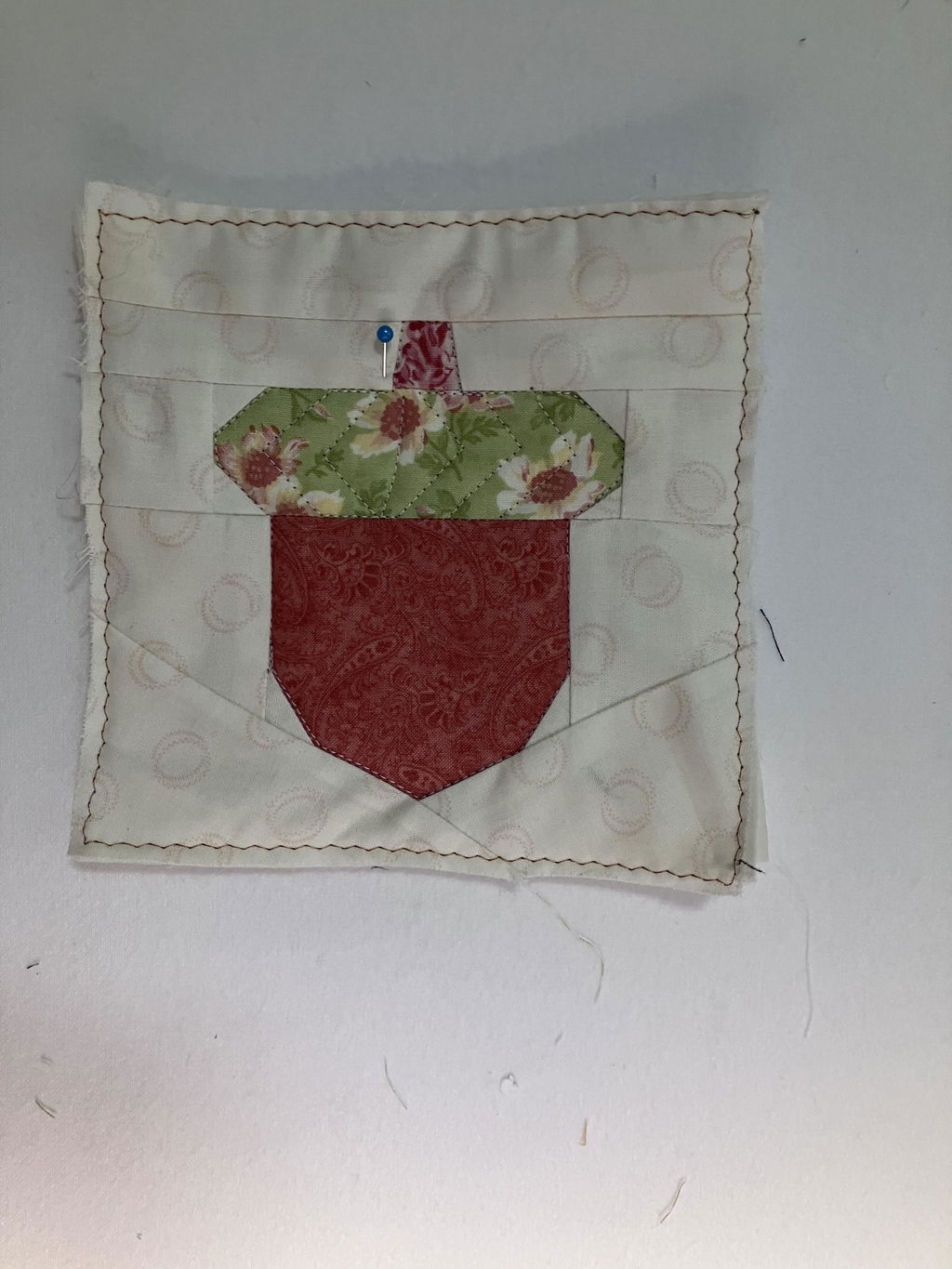
You can find Half Rectangle Triangle foundation paper piecing templates below. Click the image to take you there.

You may also like to read
Triangle in a Square Block design ideas